Showing posts with label young adult. Show all posts

Saturday, 1 November 2014

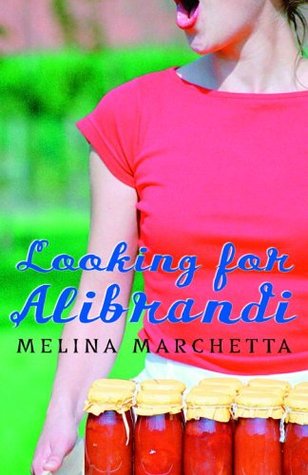
Looking for Alibrandi by Melina Marchetta

Source: www.goodreads.com
Looking for Alibrandi takes us through Josie's final year in high school. Being of Italian descent and from a middle-income home makes her a misfit in the elite private school she attends on scholarship. As if that is not challenging enough, her father whom she has never met suddenly appears in her life and they try to foster some kind of relationship. We also see her blossoming romance with Jacob Coote and how John Barton, whom she has had a crush on for a long time, confides in her during his dark and emotional moments. Throw in a rocky relationship and numerous conflicts with her grandmother and Josie certainly has her hands full.

This story has strong and well developed characters who are real and relatable. Told through a first person perspective through Josie, we get to see both Josie's interactions with the important people in her life as well as her musings and reflections. This gives the narration an authentic and candid voice. Melina Marchetta also manages to touch on a lot of social issues even within a short novel.

Most significantly, it explores the issues that migrant families face. Being of Italian descent, Josie faces racism in school where she is often called a "wog". Josie struggles with some confusion regarding her identity even though she was born in Australia, feeling that she is an "Italian in an Australian world" and we often see her frustrations as a result of this. As she observes, "thirty years on we're still trying to fit in as ethnics and we're still trying to fit the ethnics in as Australians." The difference in her culture and upbringing is also portrayed through her relationship with Jacob and the many issues they consequently face.

The difference in social status is also clearly depicted, especially how rich families will always remain privileged and part of the elite society. Although this issue has been touched on through several incidents in the story, Josie talks about it very succinctly in her characteristic cynical yet candid tone:
"If your father's a garbage collector, you're going to be a garbage collector, and if your father's filthy rich, you're going to be filthy rich because he'll introduce you to his rich friend's son. People breed with their own kind."
Josie also faces a lot of social stigma due to her illegitimacy. She got teased and bullied in school when she was younger and was even called names she did not yet understand. Even in high school, her schoolmates continue to make snide comments about her. To make matters worse, the Italian community is a conservative and unforgiving one who treat Josie and her mother with a sense of disapproval.

There are other coming-of-age themes that arise as the story progresses. Many of the teenage characters deal with family and parental expectations which is also part and parcel of being a teenager. Josie is pressured to conform to "Italian norms" or else, as her grandmother claims, "people will talk". Hence, she is worried about being seen on Jacob's motorbike and reluctant to tell her grandmother that she is dating Jacob. Being from an elite and high-profile family, John Barton also faces pressure to do well in school and become a lawyer and then a politician, following in his father's and grandfather's footsteps. This causes him to spiral into depression, leading him to suicide.

We also get to see how Josie matures over the year through the change in her relationship with her grandmother. In the beginning, they do not get along and argue a lot. However, after finding out more about her grandmother's past, Josie begins to understand her more and empathise with her, thus fostering a closer relationship. Being able to see the different challenges the women of different generations face and how they bravely cope with them also made reading this book a touching and heartwarming experience.

Thursday, 30 October 2014

The Pearl by John Steinbeck

Source: http://www.penguin.com.au/
When baby Coyotito gets stung by a scorpion one day, his parents, Kino and Juana, rush him to the doctor. However, as they are poor and cannot afford to pay, they are turned away. It seems like their prayers have been answered when later in the day, Kino finds a large pearl. However, he hits many obstacles while trying to sell the pearl at a justified price. In his attempt to safeguard his pearl, Kino accidentally kills someone and consequently, he and his family gets hunted down by the authorities. Eventually, Coyotito gets killed and Kino and Juana return to their lives of rural poverty.

This book explores the issue of poverty. Before Coyotito gets stung by the scorpion, Kino and his family lead a simple but contented life. Their problems only start to manifest due to their inability to pay the doctor to treat Coyotito. Things seem hopeful when Kino finds the pearl. However, he soon discovers that he is still unable to break out of poverty after the pearl buyers conspire to offer a low value for Kino's pearl. His desire to provide a better life for his family eventually leads to tragedy and the loss of innocence.

Through this story, young adults can get some exposure to colonialisation as a new concept and the issues it causes. We see how under colonial domination and oppression, the native people are treated very unjustly. Even though Kino finds a large pearl of high value, by being a Mexican native, he is still unable to save his family from a tragic fate. The doctor is also shown treating Kino in a very condescending manner and his conviction of his own cultural superiority is clearly demonstrated. As the story progresses, we see that many tragic incidents are caused by the powerful trying to take advantage of the weak.

The Pearl has a sad and emotional ending but is a very powerful book. Young adults will get to witness the familial love of Kino and his family and how greed and power can destroy a peaceful, simple life.

Monday, 27 October 2014

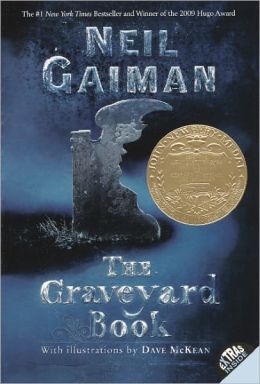
The Graveyard Book by Neil Gaiman

Source: www.barnesandnoble.com
The Graveyard Book is a retelling of Rudyard Kipling's The Jungle Book but set in a graveyard instead. Having escaped the murder who killed his family, Nobody "Bod" Owens seeks shelter in a disused graveyard and is brought up and sheltered by the community of the dead. He is given the "Freedom of the Graveyard", allowing him to learn ghost tricks including the ability to appear invisible when someone is looking at him. This book follows Bod's experiences and adventures growing up in the graveyard and the delightful array of characters who help bring him up. We also see his attempt at making friends with a human girl, Scarlett. At the end of the story, Bod also discovers why his family was killed and why he is being hunted.

The Graveyard Book is a highly imaginative, exhilarating fantasy adventure and is told captivatingly. Neil Gaiman is a lively and dramatic storyteller who is sure to enchant readers of all ages. Readers who are interested in the supernatural will be especially delighted as vampires, ghouls and other spirits of the dead run rampant in this story.

The classic good vs evil theme has also been given a fun twist here. Mummies and vampires who are traditionally given evil roles are portrayed as good characters while the villains are human. Many characters are also not clearly good or evil but face choices which will lead them to be either.

An interesting question for children to ponder while reading this book is: how can the dead raise a human boy? Bod faces the question of identity since is not dead yet he has no experience interacting with the living. Even though Bod is a living human being, the community in the graveyard take good care of him and we see their undying (pun intended) love for Bod throughout the story. The coming-of-age theme makes an appearance in this book as well and can be seen when it is time for Bod to leave the graveyard, which he has come to associate with the safety and comfort of home. We see him leaving with a sense of uncertainty. Is he prepared for the real world? Can he assimilate into the society of the living?

This book is not only great for young adults but also a good book for parents and educators to read aloud to younger children. Children who have enjoyed this book should also be encouraged to read Rudyard Kipling's The Jungle Book.

Friday, 24 October 2014

Magician: Apprentice (Graphic Novel) by Raymond E Feist

Source: http://www.crydee.com/
Magician: Apprentice is a graphic novel adaptation of a fantasy novel of the same title.
Source: http://www.crydee.com/
Set in the fictional kingdom of Midkemia, this story tells of the adventures of two young kitchen boys, Pug and Tomas. One fateful day, Pug discovers an alien ship wrecked along the shore. Anticipating an invasion from this alien race, Pug and Tomas find themselves part of a convoy, travelling to the capital of Midkemia to warn the king. However, their party is attacked along the way and this is just the beginning of a long, eventful and swashbuckling adventure.

Amid the plethora of superhero stories, Magician: Apprentice offers something different to graphic novel fans. Being a graphic novel adaptation of a fantasy novel, Magician: Apprentice contains all the traditional elements of a high fantasy tale. Fast paced and action packed, readers will be taken on an adventurous journey that is sure to keep them hooked.

Although part of an epic fantasy saga, Magician: Apprentice does not have an overly complicated plot. Hence, it makes for an excellent read for young adults and even for readers in their early teens. The characters are varied, strong and well-developed and readers can very easily relate to them. Having two young teenage boys, Pug and Tomas, as protagonists, this graphic novel does feature several coming of age themes that are close to the heart of many teenagers. Most significantly, we see how Pug and Tomas try to find their place in society as they take up their respective apprenticeships (Tomas as a soldier and Pug as a magician).

Reading this story as a graphic novel is a great way to introduce the fantasy genre to reluctant readers. It is also a fantastic and lighthearted way to expose young teens to new ideas and concepts. As it is set in a primary world that does not exist in reality, readers can be encouraged to explore worldbuilding, thus fostering creativity. In addition, although Midkemia is ruled by a monarchy, this story contains many political intricacies which can spark an interest in politics in young readers.

Monday, 6 October 2014

All I Ever Wanted by Vikki Wakefield

Source: http://vikkiwakefield.com
Mim, a teenage girl who is turning 17, has been brought up by a single mother and two brothers who are drug dealers. However, she has very firmly made up her mind that she will not turn out like her mother. Hence, she proceeds to set a list of rules for herself to live by. "I will finish school. I will not take drugs..." the list goes on and on. One day, her mother sends her on an errand to pick up a dubious package. Unfortunately, it gets stolen on her way home and consequently, her life starts to unravel and she starts breaking those rules one by one.

Although many teenagers would not have grown up in the same circumstances at Mim, the experiences and emotions she goes though are things that most teenagers would be able to relate to. Friendships, romance, peer pressure, dreams and aspirations are just a few issues Mim constantly contends with just like any other teenager anywhere else in the world.

Like many teenagers, Mim feels misunderstood and that she does not fit in. However, instead of succumbing to peer pressure, she strives to be "better" than her mother and her family by setting a list of rules for herself which she works hard to adhere to. This causes her to alienate herself from her family and friends and even to fall out with her best friend.

Teenagers also tend to feel that the world is against them. Mim is no different. She feels that her current situation that she has been forced into by being born into a dysfunctional family is holding her back from having a bright future. By the end of the book however, she realises that she has misjudged many of the people in her life, especially her mother. The package which her mothers asks her to pick up at the beginning of the story turns out to be documents for an exchange programme in France and not drugs like what Mim thinks it is. This shows that contrary to what Mim thinks, her mother actually understands her very well and knows how much she desires to get away from her hometown and to see the world.

With a heartwarming yet gritty and honest story and authentic characters, All I Ever Wanted is definitely a book which many teenagers will be able to relate to. It also encourages them not to be so quick to dismiss the care and concern from their family and friends just because they are under the impression that they do not understand them. This is undeniably a highly recommended coming of age book which will resonate with many teenagers.

Friday, 3 October 2014

Gone Case by Dave Chua

Source: www.goodreads.com

Gone Case is narrated by a 12-year-old boy named Yong. Being a typical Singaporean boy, he tells of his everyday experiences of growing up in a Housing Development Board (HDB) estate and the challenges he faces in school while preparing for his Primary School Leaving Examination (PSLE). We also get a peek into his family life as he comes to terms with the death of his grandmother and how his parents' financial difficulties affect his family.

Growing up in Singapore in the 1990's, reading this book was like a trip down memory lane. Using vivid descriptions, Dave Chua provides an honest and real picture of what a typical HDB housing estate in Singapore was like. The heavy use of Singlish in the dialogues also adds to its authenticity. Many issues Yong deals with as a 12-year-old also resonates with many Singaporeans, especially those of the same generation. Preparing for his PSLE, being a prefect in school and the upgrading of the playground in his neighbourhood are just a few striking examples. What I related to the most was how many students viewed the education system then.
"I feel like a liar, a fraud, that all my knowledge is false and that I really do not know anything at all. But this is the way to study. If I do not understand something I read and read and do it until I could do the problem through a method, never really comprehending but able to look like I know, enough to get some marks on a question."
This very clearly echoes the thoughts of many students and educators then and was often a topic for discussion.

Besides issues that are distinctly Singaporean, Yong also experiences many things that are common to any adolescent regardless of country. He constantly struggles to strike a balance between peer pressure and his parents' expectations of him. He also nurses a crush on his best friend's sister. These are common concerns that are part and parcel of growing up and anyone would be able to relate to them.

While Gone Case is a very descriptive book with a very atmospheric and slightly melodramatic feel, it does not draw readers in with a strong and gripping plot. For the most part, we see the protagonist, Yong, merely recounting his experiences and observations. He seems largely disengaged and does not play a significant role in driving the plot. Hence, young readers who are after fast-paced and exciting plots may grow disinterested quickly.

Friday, 26 September 2014

Tomorrow, When the War Began by John Marsden

Source: www.goodreads.com
It's the Christmas holidays and Ellie and a group of friends decide to go on a camping trip before school starts again. All goes well and they spend an enjoyable few days in a nearby mountainous area. When the return however, they find that their hometown has been invaded and all their friends and families have been captured. Together, they fight for survival as they try to discover the fates of their families

What makes this book stand out is the way it demonstrates how adversity can bring out certain remarkable strengths in the characters.

Courage
Having lead relatively safe and sheltered lives, Ellie and friends now have to deal with living in a country that has been invaded. Suddenly, death becomes a very real threat for all of them and they face it with remarkable courage.

After Lee gets shot, a normally timid Robyn faces the challenge of protecting her injured friend with surprising grit and determination. Although she is known to be squeamish around blood and needles, she administers painkiller injections for Lee without batting an eyelid. Homer also demonstrates tremendous tenacity, stepping up as their unofficial leader to provide the direction the group needs in challenging situations.

Resourcefulness
Having to rely on themselves, Ellie and her friends are forced to source for their own food and supplies. Knowing that they need to plan for their survival for an indefinite period of time, they start to ration their food supplies. In addition to scavenging from the houses in their neighbourhood, they also learn to have the foresight to plan for the long-term and start rearing chickens and growing their own vegetables.

We also see how innovative they can get, thinking of ways to get themselves out of difficult situations. One fantastic example is how Ellie, Robyn and Homer rescue an injured Lee using a truck with a shovel. Throughout the story, they also have to come up with numerous ingenious ways to evade soldiers and gather information about their families and the invaders.

Love
Instead of staying holed up in the wild countryside where they can remain undetected, their love for the families drives this group of teenagers to continue to venture into town to find out about the safety and living conditions of their families. They do this in spite of numerous run ins with soldiers of the invading army, risking their lives time and time again.

At the end of the book, we also see Kevin's love for Corrie when he drives her to the hospital after she gets shot. Unwilling to abandon her, he does this despite knowing that he will be leading himself straight to the enemy.

This book also provides a channel for teenagers to explore themes and issues related to war. While listening to news about the war on the radio, they find out that the motivation behind the invasion is "reducing imbalances within the region". Robyn then begins to empathise with the invaders, saying that there "doesn't have to be a right side and a wrong side."

Similarly, in order to escape from a group of soldiers, Ellie blows up a ride-on mower which kills two soldiers. After this incident, we see her facing feelings of guilt and she starts to question herself:
"Had I killed out of love of my family, as part of a noble crusade to rescue friends and family and keep our land free? Or had I killed because I valued my life above that of others? Would it be OK for me to kill a dozen others to keep myself alive?"
This can lead readers to ponder upon the following:

Can attacking another country ever be justified?
Can killing another person ever be justified?

With an exciting and fast paced plot that is full of suspense, this book is definitely an addictive read. The characters are well developed and engaging which draws readers in to be part of their adventure. This is a book that both adults and young adults will enjoy and I look forward to reading the rest of the series!